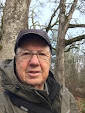
My involvement in the design and construction of artificial
nesting cavities, or "subsidized bird housing", as Lee Slattum calls it, has evidently
obligated me to some on-going maintenance responsibilities. I naively thought that
once my work on the construction was completed, my job was done. But there appears to be continuing issues of "implied
warranties" or possibly "renter’s rights", that seem to cloud the issue. I am
shown here yesterday replacing the front of a "housing unit", the result of
storm damage or raccoon vandalism. Bottom
line; It looks like I will be staying on in some kind of a maintenance position
here at the Salem Audubon Nature Reserve.
Thursday, February 27, 2014
Wednesday, February 26, 2014
Persistence Pays Off
This morning persistence paid off, I got a photo of a
Black-capped Chickadee checking out one of our nesting sites at the SalemAudubon Nature Reserve. This was my
sixth trip back since seeing the activity on Saturday, and I wanted
photographic evidence.
The whole design of making an artificial cavity for a nesting site was something I came up with in the middle of the night. Lots of ideas of mine don’t turn out so good when looked at in the light of day. They seem perfect as I roll and toss in a state of semi-consciousness all night long, but when examined closely the next morning after I’m wide awake, I often wonder, “what made me think that was a good idea”. So understandably I have been a little anxious to see if this is one that turns out.
Now it’s a waiting game to see if the site passed inspection
or they choose another one, then more waiting to see if the chickadees actually
construct a nest in this cavity or another. And even more important and
requiring even more waiting, that they are successful in raising some chicks. I
think there is going to be a lot more patience and persistence involved in this
project.
Tuesday, February 25, 2014
White-breasted Nuthatch
Saturday while showing some
friends around the Salem Audubon Nature Reserve, we noticed some Black-capped
Chickadees paying attention to two different artificial nesting cavities that volunteers
have erected. This really got me excited, and I have been back every day,
sometimes twice a day, hoping to be able to see and photograph some activity at
any of the sites. I was back again this morning and did not see any activity at
any of our constructed sites, but I did spot this White-breasted Nuthatch
checking out a natural cavity. Actually
from the photo it looks like he spotted me, watching him. I continue to be
fascinated with how much can be learned just by simple observation, and in this
case it was not what I was expecting, but it was something new. We have six logs
in place with artificial cavities, and three more logs to erect. You can bet I
will be keeping close tabs on all of them with my fingers crossed.
Sunday, February 23, 2014
California Gulls
Gulls, or “sea gulls” to the uninformed, are something you expect to see when you go to the beach. They are always prolific along the sandy
shore of our coast line, but not so common inland. So, I was a little surprised to see a flock of
35 yesterday during a walk through Salem’s Waterfront Park floating on the
flooded Willamette River. That’s one of things I enjoy about birding so much,
every day seems to bring about something unexpected. If you look closely at
this pair you will notice the black and red spots on the bill which is the
diagnostic clue to determining that they are California Gulls.
Thursday, February 20, 2014
Brown Creeper
Lee Slatum and my wife Jeanette have talked me into posting
this photo. I’m not especially proud of
it, but then there is the fact that Brown Creepers are just plain hard to
photograph. They are busy, busy, birds, up and down and around a tree, never
still, constantly looking for bugs. And
their coloring camouflages them so well against the bark it makes them very hard
to see let alone focus a camera. This
one shows up a little better because of the green moss. He is at a rather odd
angle, but notice his stiff tail feathers that he uses to support his body as
well as his legs. I had gone early yesterday to the Salem Audubon Nature Reserve
in West Salem where I volunteer, to be able to spend some time looking for
birds before starting to work. The sighting of this Brown Creeper was what I
term the “gift of the day”.
Tuesday, February 18, 2014
Non-native Species
If you know anything about Eurasian Collared-doves as shown
above, you may wonder what I find photo worthy about this bird. They are a non-native
species that has spread across the United States in the last thirty years at an
alarming rate. But what caught my
attention was that this was the first time I have actually seen this bird in
Salemtowne since moving here over three months ago. We have been enjoying watching the native
Mourning Doves daily at our feeder and were somewhat surprised when a pair of
Eurasian Collared-doves swept in and took control of the feeder area. This reminded me of what took place at our
home in Elkton several years ago. The
more Eurasian Collared-doves we saw the fewer native Mourning Doves we saw,
until we rarely saw any Mourning Doves. And
here is another interesting example. While birding at Ankeny National Wildlife
Refuge yesterday, we saw a group of 22 Eurasian Collared-doves at Pintail Marsh.
I’ve usually only seen them in urban areas, so was surprised to see this large
number in a rather natural area. The Eurasian Collared-dove, as well as the
Eastern Fox Squirrel that I have posted about the last two days, are both
non-native species that are spreading rapidly, and in my opinion are crowding
out native species.
Monday, February 17, 2014
Size Does Matter
When it comes to identifying tree squirrels, size does
matter. This is another photo I took of
the Eastern Fox Squirrel yesterday. In
this photo he is stretched out along the top of the chain-link fence. I later
measured the squares in the fence and they are three inches across. Counting the
squares of the squirrel’s length I can safely say he is over seven links long,
so 3x7=21 inches. This narrows down the choices. The closest squirrel in color is the
Douglas Squirrel which is definitely smaller. Squirrels are measured from head
to tip of tail. Douglas Squirrels range from
11-14 inches. Eastern Fox Squirrels
measure from 18-28 inches, making them the largest tree squirrel in North
America.
Subscribe to:
Posts (Atom)